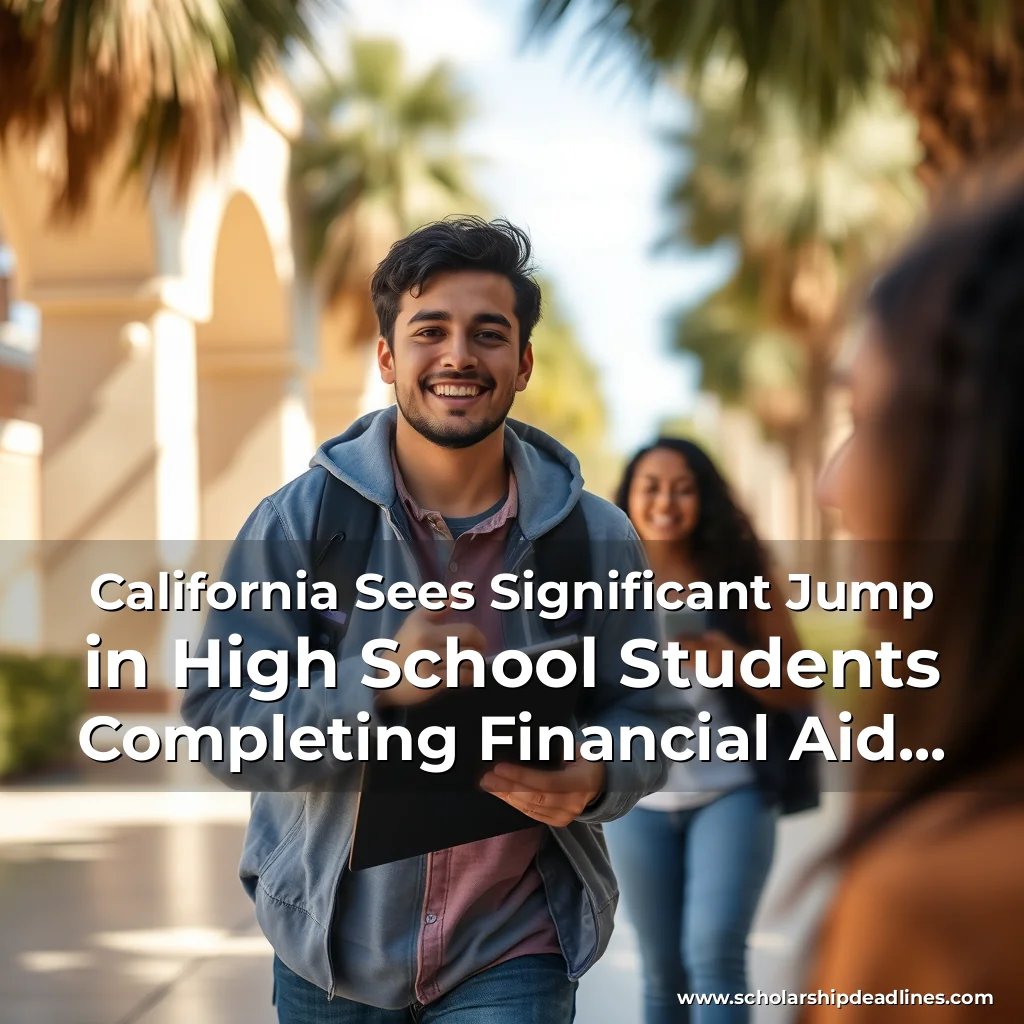
Student aid officials in California are reporting a remarkable increase in the number of high school students completing applications for financial aid, with a nearly 9% rise compared to last year. This represents a significant increase of over 24,000 applications.
- The rise in completion rates is attributed to a combination of factors, including the extension of the application deadline and the hosting of workshops, such as the “Cash for College” program.
- Additionally, the agency allowed U.S. citizens in mixed-immigration status families to complete the California Dream Act Application, which provides state-based financial aid for undocumented students.
Universities use financial aid data to calculate how much students will pay to attend each campus. Based on this information, schools make offers to prospective students, which can be grants, loans, scholarships, or work-study. For many students, especially those who are the first in their families to pursue higher education and those from working-class backgrounds, financial aid packages often determine where they’ll go to college.
The commission’s efforts to boost completion rates are a welcome change, especially given the challenges faced by students in California last year. According to the commission, the financial aid completion rate was lagging behind last year’s due to ongoing debates about the value of college education, the late release of the Free Application for Federal Student Aid, or FAFSA, and fears about how the Trump administration might use students’ personal data.
During the extension period between March and April, the commission received 57,000 additional applications. The number of high school seniors who completed the California Dream Act Application also increased significantly, from 3,597 last spring to 6,329 to date.
Jessica Moldoff, the agency’s deputy director of research, analysis, and program innovation, noted that this increase is largely due to the fact that many students in mixed-immigration status families opted to complete the California Dream Act Application instead of the FAFSA.
| Application Deadline Extension | Number of Additional Applications Received | Number of High School Seniors Who Completed California Dream Act Application |
|---|---|---|
| Late February | 57,000 | 6,329 (up from 3,597 last spring) |
The commission’s efforts to boost completion rates have been successful, but there are still challenges ahead. In a webinar held on Thursday morning, student aid commissioners, school counselors, and other advocates across the state emphasized the need to encourage prospective community college students to apply for financial aid by the state’s September 2 deadline.
“I believe that every student deserves access to higher education, regardless of their background or immigration status. We need to ensure that all students are aware of the financial aid options available to them and that they have the support and resources they need to succeed.”
— Commissioner
By highlighting the importance of financial aid and the various options available, the commission aims to promote a more inclusive and equitable higher education system. This can have a significant impact on the lives of students and their families, helping to break down barriers and create opportunities for success.
Key Statistics
- A nearly 9% increase in high school students completing financial aid applications compared to last year.
- Over 24,000 additional applications submitted.
- A 76% increase in the number of high school seniors who completed the California Dream Act Application.
What’s Next
The commission and its partners will now focus on encouraging prospective community college students to apply for financial aid by the state’s September 2 deadline. This is an important step in ensuring that all students have access to the financial aid options they need to succeed.
By working together, the commission, schools, and community organizations can promote a more inclusive and equitable higher education system, where every student has the opportunity to succeed.
As Jessica Moldoff noted, “The work we do is not done yet.

news is a contributor at ScholarshipDeadlines. We are committed to providing well-researched, accurate, and valuable content to our readers.